ofs_2012_image

Complete Surrender to the Moment


Magdalena Kožená spoke to the dramaturge Peter Blaha about her approach to this challenging role of Carmen and about the particular relationship to life and death on the part of the Spanish in general.

>> go to text


Magdalena Kožená. Photo: (c) Mathias Bothor/DG


Salzburg Easter Festival 2012 


Sir Simon Rattle explains the special features of the programme in a video introduction.

>> go to video


Sir Simon Rattle. Photo: (c) Jim Rakete


Complete Programme 2012


Available in PDF format for download here:

Download Complete programme 2012 (PDF, 36 KB)


Ticket booking


Ticket Office

Herbert-von-Karajan-Platz 9
5020 Salzburg, Austria 
 

Tel. +43/662/80 45-361
  +43/662/80 45-362
Fax +43/662/80 45-790

karten@ofs-sbg.at

Opening Hours:
Mo-Fr 9.00 a.m.-1.00 p.m.


With Animal Instinct


Stage director and choreographer Aletta Collins is already hard at work on her production of Bizet’s "Carmen" for the 2012 Salzburg Easter Festival. She spoke about her approach to the main character and the role of dance in her production in conversation with the dramaturge Peter Blaha.

Gabrielle Dalton (costume design), Miriam Buether (stage design) and Aletta Collins (stage direction) at the Bauprobe. Photo: (c) Forster

Carmen is one of the most frequently performed operas in the world. Its libretto by Henri Meilhac and Ludovic Halévy was based on a short story by Prosper Mérimée. In turn the opera has spawned numerous later adaptations, from dance theatre to the cinema. For Aletta Collins, who is staging Carmen at the 2012 Salzburg Easter Festival, this popularity represents a particular challenge. “People love this opera. Everyone knows it, everyone is familiar with the tunes. You have to be very careful not to stage Carmen as a succession of individual numbers or leave the story to tell itself. In that way you’d run the risk of losing sight of the story. You have to find a fresh approach to this story and bring out the drama that is associated with this wonderful music.”

Aletta Collins, who first made a name for herself as a dancer and choreographer before founding her own company and becoming an Associate Artist of the Royal Opera in London, discovered a new approach to the work not only by studying the libretto and score in detail but by repeatedly asking herself questions like “Who exactly is Carmen? What is it that’s driving her? Why is she working in a cigarette factory when she clearly has other ways of earning a living, including her sideline as a member of a gang of smugglers? Questions like these help us to get the know the characters and in that way to gain a better understanding of the story.”


Society in a state of upheaval


One question above all triggered a whole series of related ideas and allowed the London-born director to take her production concept in one particular direction: “Why are there so many soldiers onstage at the very beginning of the action? The more I thought about this question, the more I was reminded of the Spanish Civil War, in other words, the 1930s. This war not only divided Spanish society as a whole, it even divided individual families. Concepts of what constituted the enemy were created or revived, and arrangements associated with the old order were destroyed and new ones established in their place. I think this social dynamic is very helpful in telling the story of Carmen. It certainly helps to explain the presence of so many soldiers in the opening act if we start out from the assumption that the cigarette factory is under military control and that the many women who work there, including Carmen, are forced to do so. The gypsies who play such a vital role in the opera are a part of this society. But because everything is in a state of upheaval, certain spaces open up that they, as outsiders, can use for their own interests.”


Set model for Carmen. Photo: (c) Forster


>> To be continued here.

Programme 2012


31 March-9 April 


Opera


Georges Bizet

CARMEN


Stage director:

Aletta Collins


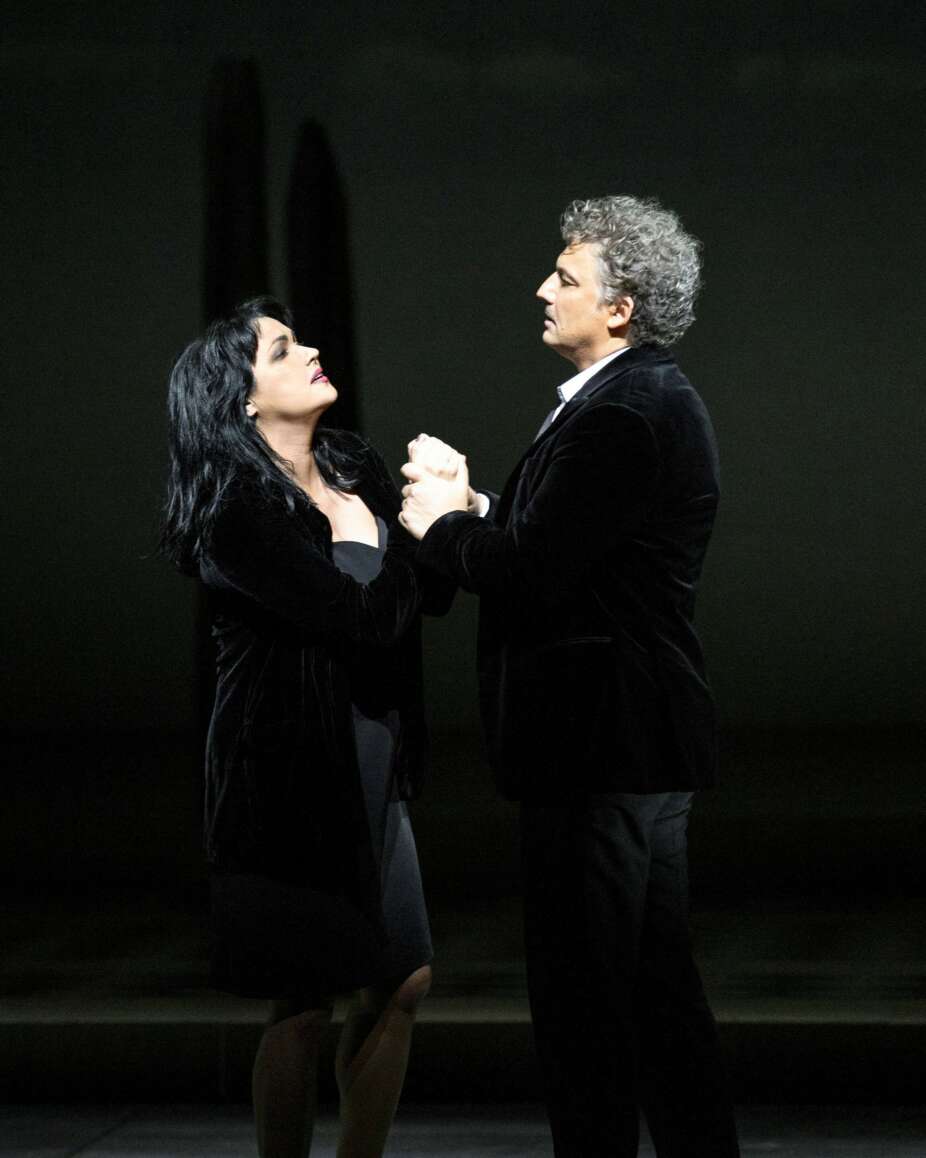
Carmen:
Magdalena Kožená

Don Josè:
Jonas Kaufmann

Escamillo:
Kostas Smoriginas

Micaëla:
Genia Kühmeier


Conductor:
Sir Simon Rattle


Berliner Philharmoniker


Orchestral and Choral Concerts


ANTON BRUCKNER      
Symphony No. 8 in C minor

(2nd version, 1890)

Zubin Mehta, Conductor
(50th anniversary of his debut with the Berliner Philharmoniker)


ROBERT SCHUMANN   
Nachtlied
op. 108
Piano Concerto in A minor op. 54

LUCIANO BERIO       
O King


GABRIEL FAURÉ       
Requiem
op. 48

Murray Perahia, Piano
Kate Royal, Soprano
Christian Gerhaher, Baritone
Rundfunkchor Berlin

Sir Simon Rattle, Conductor


LUDWIG VAN BEETHOVEN  
Piano Concerto No. 2 B-Dur op. 19

GUSTAV MAHLER      
Das Lied von der Erde


Emanuel Ax, Piano
Anne Sofie von Otter, Mezzo-soprano
Jonas Kaufmann, Tenor

Sir Simon Rattle,
Dirigent

Berliner Philharmoniker