Between Tradition and the Modern
The Development of Salzburg’s Easter Festival
Beginnings
It all started in 1967. Herbert von Karajan founded the Salzburg Easter Festival, and it established a name for itself from the very beginning as one of the most exclusive, artistically excellent and internationally renowned music festivals around the world. Ever since, the focuses have been a lavish opera production at the Großes Festspielhaus and the great orchestral repertoire.
The death of the great maestro Karajan in 1989 represented a turning point in the Easter Festival’s artistic development. After a four-year interregnum which the maestros Kurt Masur, Bernard Haitink and Sir Georg Solti filled with their inimitable personalities as artists, Claudio Abbado succeeded in 1994 as the artistic director, carrying on the long tradition of the Berlin Philharmonic Orchestra’s responsible principal conductor serving as the Festival’s artistic director. After Abbado left his position in Berlin, his successor, Sir Simon Rattle, took charge of Salzburg’s artistic planning beginning in the 2003 season.
Underlying Concept
The focus of the Easter Festival, next to the extraordinary conductors, has always been the exceptional mastery of the Berlin Philharmonic Orchestra, which is responsible for both the orchestral concerts and the orchestral arrangement of the operas. This serves to underline the Festival’s uniqueness.
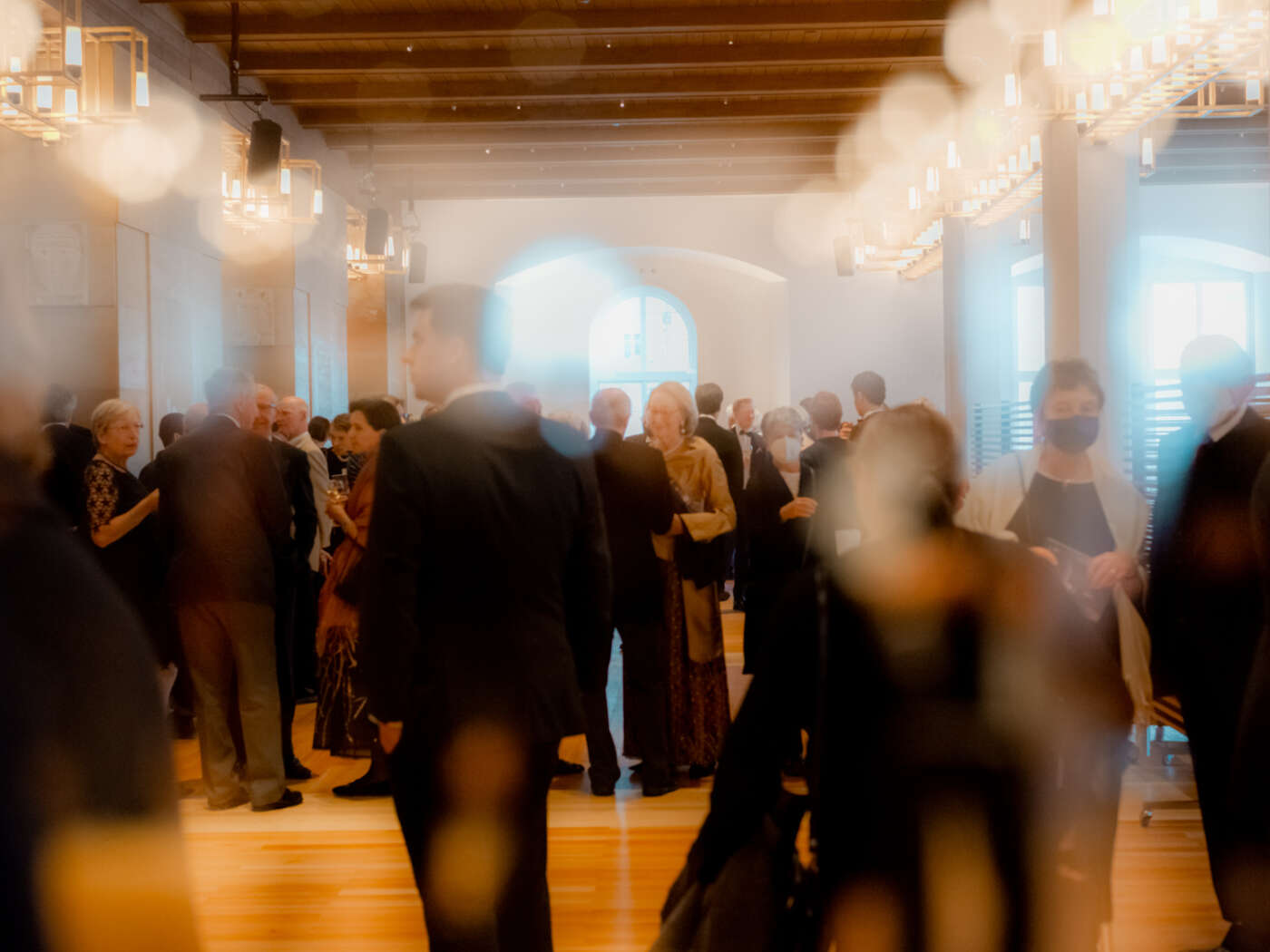
Herbert von Karajan’s motivation when establishing the Easter Festival was a desire to expand upon the festival concept in Salzburg, though on the other hand this event was never intended to be a mere offshoot of the Summer Festival, and it has been allowed to develop and grow independently. The reason was not only the limited time frame available, as the Easter Festival was forced to prove itself during the normal opera and concert season. This was possible only with first-class directors, performers of the highest possible quality and lavish productions. The Easter Festival soon attracted an illustrious audience with an exceptional interest in the arts which has since become a dedicated community.
New Ventures
With Sir Simon Rattle and even earlier, during the time when Claudio Abbado was artistic director, the Easter Festival began to take on new artistic challenges which were manifested in exemplary programme planning. Yet this was not the only aim: the management set itself the task of appealing to new audiences and the Easter Festival is now in the process of mobilising young people. Examples of how this is taking place are projects such as Akzente, for instance, whereby every year young people can gain insights into the opera productions through workshops and lectures. This concept of Young People and the Salzburg Easter Festival, introduced in 1994 and successfully practised ever since, was extended in 2005 so as to give as many young people as possible access to classical opera. Over 1,500 young people from 17 schools have actively taken part in various projects: they create paintings on the relevant theme of the Easter Festival, compose music, take part in plays, discussions, and after extensive preparation by means of introductory lectures they attend the main orchestral rehearsal of the annual opera production. The overall number of participants has risen to around 8000 in 2007 and clearly shows how successful educational work has been in the form of the Akzente projects.
The series of concerts of contemporary music, Kontrapunkte, was also introduced in 1994 with the aim of presenting a contrasting and complementary programme to the large scale concerts in the Grosses Festspielhaus. Chamber music of the highest level is performed by various ensembles of the Berlin Philharmonic.
Since 1994 youth orchestras have also been given the opportunity to perform a special concert as part of the Easter Festival. In 2005 the renowned Gustav Mahler Youth Orchestra was conducted by Franz Welser-Möst and in 2006 Vladimir Ashkenazy conducted the European Union Youth Orchestra. In 2007 the Gustav Mahler Youth Orchestra again performed at the Salzburg Easter Festival conducted by Myung-Whun Chung. By including a youth orchestra in the programme of the Easter Festival it is intended to give a larger public the possibility of experiencing outstanding festival concerts. Above all, however, it is hoped to arouse the interest of young people in attending concerts and thereby open up new circles of potential clients for the Easter Festival.
Despite the various measures to open up the Easter Festival to new audiences it has by no means sacrificed anything of its exclusivity and cosmopolitan character. Regular guests still include business magnates from home and abroad. Thus the festival is one of the most important generators of tourism and economic factors in the city and province of Salzburg.
Programming
The Festival begins each year on the Saturday before Palm Sunday with the opera premiere and lasts until Easter Monday, when the opera is traditionally performed a second time. Six evenings of three concerts each with the Berlin Philharmonic Orchestra are scheduled in between. Special concerts and the so-called Kontrapunkte will also take place, some of them featuring soloists from the Berlin Philharmonic and other ensembles, and they will be relevant to the opera and orchestral concerts.
After “Fidelio” in 2003 and “Così fan tutte” in 2004, Sir Simon Rattle brought the world of English opera into the spotlight in spring 2005 with Benjamin Britten’s “Peter Grimes.” In 2006, French opera was the program’s focus: Debussy’s sole operatic work, “Pelléas et Mélisande,” was directed by Stanislas Nordey. The production of Wagner’s “Ring der Nibelungen” will begin in 2007.
Ambience
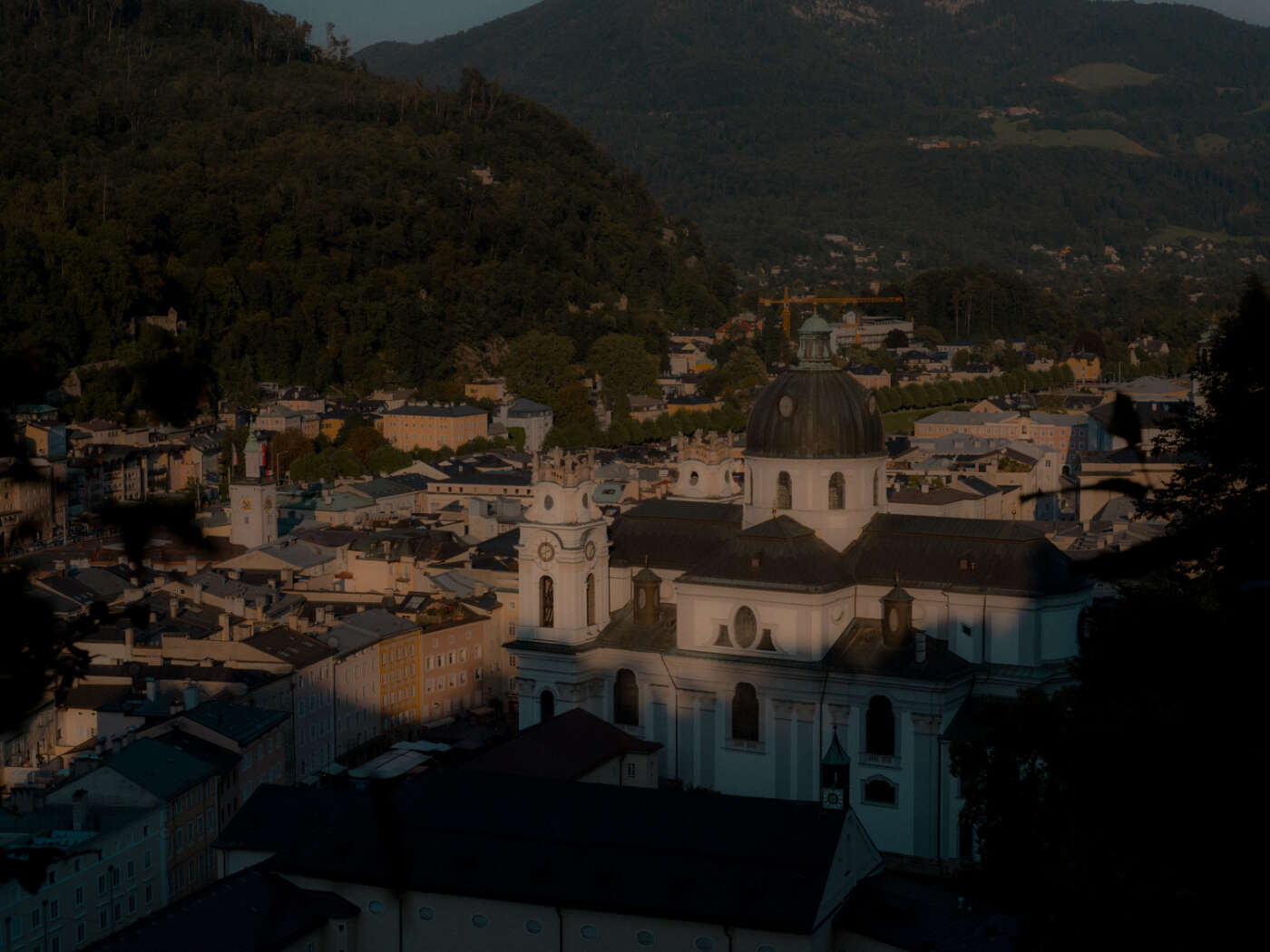
Both the opera performances and the concerts are scheduled so as to allow the listeners sufficient time to enjoy Salzburg’s famous Baroque atmosphere and the picturesque surrounding countryside.
This extremely well-positioned festival, with its excellent reputation as a home and workshop for artists, can offer its sponsors not only an exclusive advertising platform among an exceptionally well-educated and affluent public, there are also exclusive opportunities for public-relations activities in a unique environment.
Patrons
Each year, no fewer than 2,500 patrons of Salzburg’s Easter Festival from around the world purchase a subscription comprising a reservation at an opera performance and three orchestral concerts given by the Berlin Philharmonic Orchestra. They also pay a membership fee to the association of patrons, thanks to which the Easter Festival receives additional funds and ideas for achieving its goals and those of the Herbert von Karajan Foundation.
Global Activities
Furthermore, thanks to the international character of the audience, co-productions (such as with London’s Royal Opera in Covent Garden, the New York Metropolitan Opera and the Festival d’Art Lyrique d’Aix-en-Provence) and guest appearances (for example the Tokyo productions of “Tristan und Isolde” in November 2000 and “Fidelio” in November 2004), the Easter Festival’s sponsors are able to address their target groups around the world. An important factor is the coverage of the international media which regularly accompanies the Easter Festival.
Current Sponsors
Zurich’s Vontobel banking group has been one of the main sponsors of the Easter Festival for more than a decade. In 2002, Volkswagen AG was brought on board as a sponsor, followed by Audi AG since 2008. The Nippon Foundation has made annual contributions since 1996, and the Vienna Insurance Group has supported the festival since 2006.
Continuity is vitally important to Salzburg’s Easter Festival, not only with regard to programming and carrying on its underlying concept. We also hope for, and count on, continuity and permanence with regard to our sponsors.